
Click on the link below for the January/February 2012 newsletter.
Naval Avenue – Looking for Mentors
I am hoping that you can help identify quality adults who might volunteer with the Naval Avenue Mentoring Program. Thanks!
Sincerely,
Dianne Heckman
- image003
- image004
- image005
Make a Difference in the Life of a Child
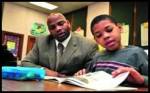
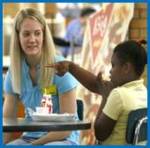
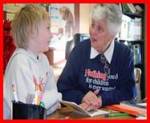
I am the new interventionist at Naval Avenue. In the past, Naval has had a student mentoring program which paired adults with students (one-on-one) during lunch recess. I am hoping to reenergize the mentoring program by finding dynamic caring adults who could provide the much needed mentoring that our young students need. Mentoring can be a valuable and meaningful experience for students and the mentors alike. The mentoring program is targeted at enhancing self-esteem and reinforcing that the young boys and girls are worthy and capable of achieving goals in life through working hard and having a positive attitude.
We currently have 15 students who have been nominated by their teachers to participate in the program based on the student’s need for meaningful relationships, a positive role model and a stronger network of stability and support. The mentor and student will be able to choose to play games, do art projects or read books inside or play outside together on the playground. We are hoping that mentors will be able to be at the school from 11:00 to 12:00 on Wednesdays. The hour long time would enable each mentor to touch the lives of two children. One during the first lunch recess (11:05-11:25) and one during the second lunch recess (11:35-11:55).
I hope that you will consider participating in the Naval Avenue Mentoring Program. Please share information with other adults who you feel would be quality mentors for our young students. You are welcome to contact me if you have any questions or to provide my phone number and contact information to any potential mentors. Attached is a copy of the Volunteer Application. I look forward to building a mentoring program at Naval Avenue that will provide a meaningful volunteer experience and enhance the lives of each of the students and adults who participate.
Sincerely,
Dr. Dianne Heckman
Interventionist
Naval Avenue Early Learning Center
900 Olympic Avenue
Bremerton, WA 98312
Office: (360) 473-4400
Phone: (360) 473-4462
FAX: (360) 473-4420
dianne.heckman

Autism parent support group, autism social skills groups
Sara Hall from the Olympic Peninsula Autism Center announces the new parent support group and social skills groups forming!
PARENT SUPPORT GROUP:
WHEN: Monthly on the first Saturday of the month, 1-3pm
First session on Saturday, January 7
WHO: Parents of children with Autism Spectrum Disorders (need not be clients at OPAC)
Facilitators, Ann Abraham- Special Ed. Teacher and Lisa Poole, Parent of a child with ASD
WHERE: Olympic PeninsulaAutismCenter, 3500 Bucklin Hill Rd., Building A, Suite 101, Silverdale, 98383
QUESTIONS: Sara Hall, 360-337-2222, sara.hall
WEBSITE: www.kitsapautism.org
SOCIAL SKILLS GROUPS:
WHEN: beginning Saturday, February 4th, weekly for 6 week sessions, preregistration required, space limited!!
WHO: Children ages 6-9 and 10-13, (need not be clients at OPAC)
DETAILS: See website for children who best fit the admission criteria and costs, registration information
WHERE: Olympic PeninsulaAutismCenter, 3500 Bucklin Hill Rd., Building A, Suite 101, Silverdale, 98383
QUESTIONS: Sara Hall, 360-337-2222, sara.hall
WEBSITE: www.kitsapautismcenter.org
Pacific Northwest Caregiver’s Conference coming up!
We all get busy and sometimes we forget deadlines! GOOD NEWS! The deadline for all caregivers to register at the special rate of $50.00 for the 3-day Pacific Northwest Caregiver’s Confernece at Great Wolf Lodge and Water Park on January 16-18th HAS BEEN EXTENDED to January 10, 2012! For more information, go to http://www.fpaws.org.
Jan/Feb 2012 KCFA Newsletter
WILL YOU STEP FORWARD AND BE A VOICE FOR FOSTER PARENTS?
HB 1624 UPDATE
The 1624 Committee has been renamed the Children Administration Foster Parent Consultation
Team (CAFPT) with a new charter approved in July of 2011. The mission statement remains
the same. “Strive to improve the well being and protection of all children in foster and relative
care and to enhance and strengthen services for children and caregivers in the State of
Washington”. The purpose is:
• Work together to enhance and strengthen services for the protection of children, and
• Work together to improve recruitment and retention of foster parents and continue to
provide enhanced training that meets the needs of foster parents and relative caregivers.
Region 3 North (previously known as Region 5) has two foster parent representative positions
on this important committee. The positions are voluntary. There is no stipend or mileage. The
duties require about two days a month and include meetings, teleconferences, videoconferences
and communicating via email.
Elizabeth Griffin Hall, elizanngriffin @ aol.com, 253-473-9252 is in the second year of her two-
year term. You are invited to contact Elizabeth at any time to express your foster parent or
relative caregiver concerns or ask questions.
The other position is vacant. Nominations can be made to TOM STOKES at
tom.stokes @ dshs.wa.gov or by contacting Elizabeth who will forward the nomination to
Tom. Qualifications for the position include experience as a foster parent and current licensure.
This committee reviews and takes forward to the State a range of issues that impact foster and
relative care. All caregivers are cordially invited to submit issues directly to the representatives
or take them in person to the Regional Recruitment and Development Strategy (RDS) meetings.
The next RDS Meeting is in Tacoma, Room 348, 9 January 2011. The meeting begins at 10 a.m.
and foster parent input is first on the agenda. The RDS Meetings for the remainder of the will be
in the same location and at the same time. The scheduled dates are 2012:
12 March 2012
11 June 2012
09 Oct 2012
10 Dec 2012
Nov-Dec 2011 Newsletter
-
- nwsltr 11 novdec pg1
-
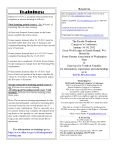
- nwsltr 11 novdec pg2
-
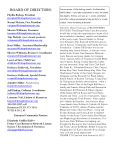
- nwsltr 11 novdec pg3
FAS…Did you know?
Fetal alcohol syndrome (FAS) is a condition that results from alcohol exposure during pregnancy. Problems that may be caused by fetal alcohol syndrome include physical deformities, intellectual disability, learning disorders, and behavioral problems. The problems caused by fetal alcohol syndrome vary from child to child, but defects caused by fetal alcohol syndrome are irreversible and are life-long – patients do not “outgrow” the manifestations of the disease by age 18.
When alcohol crosses the placenta into the baby’s blood there is no alteration in its concentration. The delicate developing embryo/fetus cannot readily eliminate the alcohol. The drug stays in the system of the embryo/fetus longer than in the mother’s. In this sce-nario alcohol is toxic or poisonous to the developing child, especially in the first trimester when essential organs are formed and crucial brain development occurs. Although there is no “safe” amount of alcohol during pregnancy, researchers show that “binge” consump-tion of alcohol is the most dangerous scenario. Alcohol has worse effects on the fetus/embryo than any “street” drug combo.
Fetal alcohol syndrome isn’t a single birth defect and cannot be diagnosed via a lab or genetic test. It’s a cluster of related problems and the most severe of a group of consequences of prenatal alcohol exposure. Collectively, the range of disorders is known as fetal alcohol spectrum disorders (FASDs). FASD represents a state of mal-adaptation. For example, In normal adaptation, one has to have a relative stable temperament and mood, processes information from all senses, make sense of verbal and non verbal cues, be able to reason logically most of the time, and have a stable environment which includes good health, age appropriate educational experi-ences, safe housing, and a loving and supportive family. Alcohol is a neuro-toxin that literally changes the brain’s chemistry in a global way including – brainstem (regulation of automatic functions like breathing, vision and hearing), cerebellum (balance and coordina-tion), limbic system (attention), cerebrum (speech/language, cognition, and memory). Hence children with FASD are frequently diag-nosed with ADHD, ODD, Depression, Anxiety, Attachment Disorder, and PTSD in addition to having low IQ scores.
A child does not have to have specific physical characteristics to be diagnosed with FASD. Because there is no particular lab test or imaging test that makes the diagnosis – instead the diagnosis is made by having 1/ a positive history of any alcohol consumption dur-ing pregnancy and 2/ a cluster of maladaptive behaviors and/or developmental and intellectual disabilities. FASDs are the leading cause of preventable intellectual disability in the general population.
In the practice of Medicine, the thought is that if professionals treat the mental health diagnosis, (therapy, medications) the symptoms will improve, and in the practice of Social Work the thought is that if professionals offer services to treat the environment (parenting classes, stable housing, and drug and alcohol treatment) the symptoms will improve. Alas, that is not always the case for FASDs . Nev-ertheless protective services are always important:
Early intervention services
By helping children from birth to 3 years obtain speech, language and sensory processing therapy early on, children with FASD will be more likely to participate in a classroom environment successfully by the time they are in kindergarten.
Involvement in special education and social services Children who receive special education geared towards their specific needs and learning style when school aged are more likely to reach their full potential. In addition, families of children with FASDs who receive social services, such as counseling and respite care have more positive experiences than families who do not receive such services.
Provide a loving, nurturing, and stable home environment
These supports can help prevent secondary conditions, such as criminal behavior, unemployment, and incomplete education.
Absence of violence Children with FASDs like all children, need to be taught acceptable ways of showing their anger or frustration, and parents and caregiv-ers must be patient, because it will take a lot longer with children with FASDs compared to more typically developing children.
Please Register for the Holiday Party!
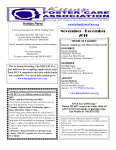
The deadline for the holiday party is approaching quickly! December 1st is just around the corner! The party is Dec 10th from 1pm -3 pm at the Lincoln Avenue Bible Church in Bremerton. Please contact Luanne to register your kids so that Santa will have a present for them!
GHOST TRAIN COMING UP!
Come and join us in Port Orchard’s beautiful Jackson Park this Saturday, October 29th. We’ll be there from 3pm – 8pm for one of our biggest fundraisers of the year: GHOST TRAIN!! The woods around the miniature steamer trains will be decorated in all sorts of Halloween scenes! Ride the train through and prepare to be amazed!! There will also be fun and games for the kids as well as a few trick or treats available at the park to enjoy before or after your ride.
 Kitsap Foster Care Association Blog